Tel/Fax: +39 055.828315 [email protected] / Facebook


The latest news from the Joomla! Team


 In the world of running shoes "traditional" (i.e. those that encourage a heel support-oriented) it is inevitable that you'll encounter in the Brooks Glycerin. Let's talk about the "gotha" of running shoe, the imprescindibii to try.
The softness is the first impression that try, accompanied by the perception of an ever-present support. Foot level (terribly important) support in turning (i.e. the path that makes the foot when the support from the heel to the tip).
No seams in the upper and breathable enough tissue: in this case is the norm for high-end shoes.
Everything contributes to a snug fit, the foot is bandaged from shoe, whatever your foot. The Glycerin 11 are available both narrow-plan (B) normal (D). The lacing system is always safe, even excessively: the 6 eyelets to laces must be governed well and until you find the right "balance" run the risk of having the shoe that tightens a bit on the instep. But after the first 30/40 km you will be definitely comfortable.
And aesthetics? Is beautiful, certainly don't want to bring the chromatic innovation but the graphics are nice. Basically no one has ever said that you have to make a color 8 shoe because it is beautiful. :)
Everything flows smoothly, even running. DNA midsole supports properly, always guaranteeing support and cushioning. In slower workouts, when resting your foot is like being on the grass, while – accelerating – responsiveness and precision sovereign reign. Surely the sole-full-length ecosystem is the most remarkable positively Brooks Glycerin 11.
Seeing the sales statistics, protective shoes and traditional setting are the "first choices" by almost all Italian runner. In other words, we like the protective shoe, that "do you feel", maybe a little heavy but that gives us the tranquility in security support. In this the Glycerin are perfect. Personally I would have preferred some gram (perceived) less but this is really my very personal opinion.
A high-end shoe, perfect for long workouts and for all the most common uses – from repeated competitions, depends obviously from what weights. List the Brooks Glycerin 11 cost 160 €, a price aligned to direct competition. You can buy online from MOTUS at the price of euro 128 by clicking here
 We publish here a training table (by Jim Larson) for those who wish to prepare for a triathlon on the sprint distance. The training program is suitable for little traithleti experts, or people who are approaching or have recently come closer to the practice of triathlon. The program consists of 8 weeks of training and caters to those who are facing their first triathlon race, both to those who have already carried out some but want to refine and elevate their level of performance still basal. Good workout at all!!
Week 1
The Rest
M 5 -10 x 100 m Swimming 15 "rec
M 12 km Bike + Combined 2 km 1 km run 1 km easy busy
G Rest
V 2 x 200 m Swim, 20 "rec.
S 15 km Bike easy
Travel 8 miles easy D
Week 2
The Rest
M 5 -10 x 100 m Swimming 15 "rec
M 15 km Valley Bike Combo + 3 miles easy
G Rest
V 3 x 200 m Swimming 20 ″ rec.
S 15 km Bike easy
D easy 6 km Race
Week 3
The Rest
M 5 -10 x 100 m Swimming 15 "rec + 4 km race engaged
M 20 km bike Combined + 5 miles easy 1 2 busy
G 15 km Bike easy
V 5 x 200 m Swimming 30 ″ rec
S 20 km Bike easy
D easy 6 km Race
Week 4
The Rest
M 5 -10 x 100 m Swimming 25 "rec + 5 km race committed
M 15 km Combined bike + 6 km easy 3 3 racing engaged
G 20 km Bike engaged
V 6 x 200 m Swimming 30 ″ rec.
S 25 km Bike easy
(D) 10 km Travel easy
Week 5
The Rest
M 5 -10 x 100 m Swimming 25 "rec
M Bike 15 km Combined easy + 4 miles easy
G Rest
V 3 x 300 m Swimming 30 ″ rec.
S 20 km Bike easy
D easy 6 km Race
Week 6
The Rest
M 5 -10 x 100 m Swimming 30 ″ rec + 5 km engaged
M Bike 25 km Valley Combined + 5 km Race 2 3 easy busy
G Bike 20 miles easy
V 4 x 300 m Swimming 30 ″ rec
S 25 km Bike easy
Travel 8 miles easy D
Week 7
The Rest
M 5 -10 x 100 m Swimming 25 "rec + 6 km race committed
M Combined 30 km 6 km + stroke Valley, 3 3 easy busy
G Bike 20 miles easy
V 5 x 300 m Swimming 30 ″ rec.
S 35 km Bike easy
Travel 8 miles easy D
Week 8
The Rest
M swimming 3 x 100 45 -5 "rec
M 15 km Bike easy
Travel 5 miles easy G
V 4 x 200 Swimming 45 "rec.
S Rest
D Triathlon Sprint
VIRB Elite is a 1080p HD Action Cam that combines advanced HD video recording with advanced Wi-Fi and GPS features. It comes with a built-in 1.4 "low power color chroma display that allows you to view the shooting image and adjust shooting and video recording modes without disconnecting the VIRB Elite from its support. Record at 1080p for Nearly 3 hours with rechargeable lithium-ion battery and features video optimization features such as image stabilization and lens distortion correction to ensure high quality shooting.
VIRB Elite records 1080p HD videos that let you revive every minute of your adventure with movies that are rich in details with high contrast and no distortion. In addition to the standard 1080p to 30 fps, you can adjust the resolution and recording speed up to 120 fps for thrilling and impressive slow motion actions. The WideVü lens, with the 16-megapixel CMOS sensor, allows you to record superior video quality. Multiple HD video modes: 1080p at 30fps, 960p at 30/48 fps, 720p at 30/60 fps, 848x480 at 120fps.
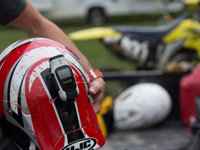
The 1.4 "Chroma display with low power consumption also allows you to display menu settings, while in preparation, you can choose the type of shooting and mode. Navigate through the menus to choose: video, time setting Lapse, multiple shot, slow mo and much more.
VIRB Elite is equipped with a 2000 mAh lithium-ion battery of its class that has been tested for a recording time of up to 3 hours at 1080p. This means that you are very likely to be tired before the battery runs out. And with multiple recharge options (sold separately) you will never be uncharged. Extend your recording time by bringing an extra battery to your adventures (see separately).
VIRB Elite can communicate with your smartphone or your computer via Wi-Fi. This way you can preview the video or the photo by checking that the settings and shooting quality meet your expectations. Also, you are able to start and stop recording directly from your smartphone and take pictures while VIRB Elite is filming.
VIRB Elite is equipped with high sensitivity GPS for data recording and, thanks to intelligent recording profiles, such as the "Ski" mode, automatically records the descent and stops recording as soon as you are paused or you are waiting for the chairlift saving The battery and memory of your microSD ™ card.
VIRB Elite, via ANT + ™ wireless connectivity, is compatible with Garmin external sensors. It can be synchronized with a temperature sensor tempe ™ , cadence sensor and speed for bikes and a cardio band. You can view sensor information in your videos, such as heart rate during your last bike ride or before making a trick. VIRB Elite also features an accelerometer and an integrated altimeter for the identification of force G and the display of the altimeter graph in real time.
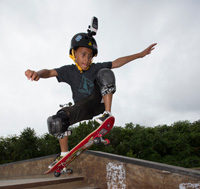
VIRB Elite has been designed to be easy to use. With a large slider on the side of your camcorder, you can start your footage without having to check the display. An acoustic click will identify the beginning of the recording. The sleek design of VIRB Elite is innovative and robust so you can always carry it with you during all your activities. You can shoot with the safety of catching the most important moments.
VIRB Elite uses ANT + ™ wireless connectivity to allow you to use other compatible Garmin products such as fenix ™ , Oregon® and Edge® as a remote control . Towards the end of 2013 will be introduced the dedicated remote that will work with the same ANT + connectivity. You do not have to lift your hands from the handlebar or disassemble the camcorder from the bracket to get the perfect shot. Likewise, with VIRB Elite, you can take advantage of Wi-Fi by stopping and starting recording or taking photos even via your smartphone or compatible Garmin device.
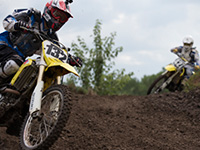
With the activation of the digital image stabilization function, VIRB allows a shake-free shooting in case of rough paths to share with more stable and fluid video with friends. Additionally, the Lens Distortion Correction (LDC) feature improves the subjective shooting perspective for better video quality.
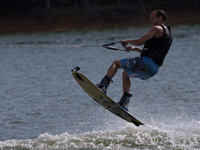
VIRB Elite is also a high performance digital camera. With a 16 megapixel photo capture and the LDC feature, you can get clearer, clearer images and less distortion, even through processing through the CMOS processor. With the VIRB scroll remote control or side button, you can shoot individual shots at 16, 12 or 8 megapixels, or you can choose the multi-shot (6 / s) or photo range (0.5, 1, 2, 5 , 10, 30, 60 seconds).
Do not miss a single moment of the video to take a picture. VIRB lets you take pictures even when recording a video at the push of a button from a compatible Garmin remote or on the camera itself.
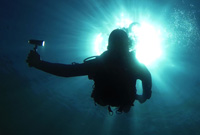

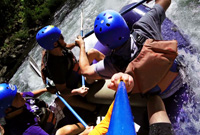
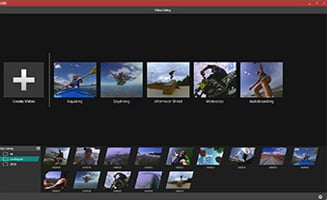
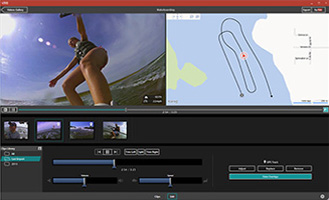
VIRB Edit is the free Garmin editing and post-production software. An intuitive program that allows you to have great editing and take advantage of all the benefits of compatibility with multiple Garmin products. For example, VIRB Edit can process the data recorded by integrated VIRB Elite GPS and compatible external sensors by entering and aligning speed, altitude, heart rate, and cadence information directly to the video you have taken during your bike exit. Or it can show the heart rate recorded throughout the parachute launch. Also, once you're satisfied with the result, you can share it on your favorite sites.
The wide variety of VIRB mount brackets allows you to securely fix your camcorder virtually anywhere. From the mounting brackets to flat surfaces and dashboards to dumbbell brackets, helmets, shoulders and multi-tear straps, and more, the VIRB brackets are tailored to any need. For more reliable, durable and anti-vibration locks, the fixing base is provided with interlocking teeth that allow a safe and shockproof housing. An adapter is also available that allows you to use VIRB with third-party brackets.
VIRB is robust and water resistant (IPX7¹). For deeper dives, the optional underwater case ensures waterproofness up to 50 meters.
Contrary to what you can imagine, gastrointestinal disorders (nausea, vomiting, diarrhea, etc.) in athletes are particularly common. According to recent literature data, in a particularly intense exercise condition, the prevalence of these disorders is around 70%.
The emergence of gastrointestinal problems leads the athlete to necessarily reduce the intensity of the exercise or, in the most serious cases, to abandon the competition. They are, in fact, among the main causes of withdrawal.
 What are the main disturbances? Gastroesophageal reflux, stomach burns, nausea, vomiting, abdominal pain, diarrhea, and blood facial presence are the most common disorders reported by endurance discipline athletes.
Who suffers most? Certainly runners are the athletes most affected by these ailments, with the same stroke as the cause, the vertical truncated oscillations of the trunk with the endodontal organs are continually shaken at each step. This problem is less evident in athletes of other disciplines like cyclists. Women suffer more frequently than men. Training is also important: there is a greater risk to those who are less trained and suddenly increase the intensity and duration of the workouts.
Gastrointestinal disorders are more frequent in races than in workouts, this fact is probably linked to the influence on such psychological stress disorders.
What are the causes? During exercise, there is a redistribution of the blood flow from the gastro-intestinal tract to the muscles and the skin. During the execution of a maximum exercise the intestinal blood flow may be reduced by up to 80% compared to rest.
High temperatures, causing more blood clotting to the skin (for thermoregulation), further reduce blood flow to the endotominal organs.
Drugs, particularly anti-inflammatory drugs, tend to worsen the membrane integrity of the intestinal mucous membranes already partially damaged by the decrease in visceral blood flow.
Another risk factor is inevitably the diet, taking in before the activity of foods rich in fat, protein, and fiber increases the risk of disturbances.
Therefore, it is important to pay attention to the precautionary diet, but also to the foods or drinks taken during training or competition. Among the main causes of the rider's diarrhea there are too much water-soluble solutions of sugars and particularly fructose, this has a rather slow intestinal absorption, in the small intestine it recalls water with increased osmolarity (expression of the concentration of particles in A solution) and consequent mechanical stimulus to diarrhea.
How to avoid these problems: a practical guide
 Pre-meal: The meal before the race should be such as to make the right amount of carbohydrates but limit the consumption of high-fiber foods (legumes, pasta and whole bread, fruit, vegetables, etc.). Useful advice, especially in subjects particularly susceptible to these disorders, is to avoid milk or foods with high lactose content (cheeses not seasoned) in the hours prior to the competition. Coffee should also be limited and especially the food caffeinated whose digestion can be particularly difficult. Another important factor is the amount of fat taken in the hours before the race. Fatty, processed foods and especially fried foods put the athlete at risk of disturbances.
Last but not least, the last meal before the race should be taken at least 3 hours after the start of the competition. This period should be increased if you have a particularly slow digestion. The meal should be made up of family foods and welcome by the athlete.
During the race: a high degree of dehydration, especially when over 2% of the body weight, as well as reducing performance and increasing perception of fatigue, slows down gastric emptying and increases the risk of gastrointestinal disturbances.
The osmolarity of the drinks you take is very important, hypertonic drinks decrease the rate of gastric emptying.
Even the temperature of the drinks is a risk factor, too hot drinks slow the gastric emptying, too cold it accelerates.
Therefore, the optimal drink should be a hypo-isotonic drink, with a carbohydrate content of 4-6% (however not higher than 10%) and should have a temperature of about 15 to 18 ° C. The presence in this drink of Glucose and sodium is very important in order to promote the intestinal absorption of liquids.
The amount of liquid to be used should vary from 150 to 200 ml every 15 minutes.
 Training to nourish and hydrate you during exercise: Training is not only useful to induce those physical adaptations that are indispensable in order to seek maximum performance. During workouts, if you are over 60 minutes long, drinks and / or food (eg, fingers, gel) should be tested in the race. Each athlete has an individual degree of "sensitivity", and the intestine is also "trained" to welcome food and drink during the effort. Environmental conditions are also to be taken into account, if the outside temperature is low and is thought to have reduced sweating, the need to take water is reduced and the beverage may be more concentrated than the recommended concentration of around 5%.
Think about the health of your intestine:
When it comes to integration in sports it's rare to hear mention of probiotics. These are beneficial bacteria for human health and are especially important for the athlete. First, their integration helps to maintain the proper composition of the intestinal bacterial flora and thus to reduce the risk of gastrointestinal disturbances. Other positive effects include improved digestion and absorption of nutrients and the important immunostimulatory effect. In fact, recent literature data indicate fewer respiratory tract infections in endurance athletes undergoing probiotics.
Guidelines to minimize gastrointestinal disturbances in long-lasting sports and especially in running
Bibliographical references
RWF ter Steege and JJ Kolkman, Review article: The pathophysiology and management of gastrointestinal symptoms during physical exercise, and the role of splanchnic blood flow, Aliment Pharmacol Ther 2012; 35: 516-528
- See more at: http://www.triathlontime.com/i-disturbi-gastroenterici-nellatleta-un-nemico-da-non-sottovalutare/#sthash.Vjufi7le.dpuf
 CALL US
