Tel/Fax: +39 055.828315 [email protected] / Facebook


The latest news from the Joomla! Team


 Free-floating and Triathlon Swimming: Which is the most suitable model for you?
When it comes to swimming accessories, nothing is more important than your personal preferences! Remember, there is no right model or a wrong model: the most suitable glasses for you is always the one with which you are better off to swim! But if you need help to guide you in choosing, here are some factors to consider ...
Are you an expert or a beginner?
If you are an expert swimmer and swim often at the head of the group, you will probably find yourself more comfortable with a hard-lined goggle, which guarantees a perfectly clear front view, allowing you to clearly distinguish even the farthest elements. If you are the first weapon or you often swim your elbow with other athletes, then opt for a broader and soft lenses model that will ensure you have a good side view and will offer you greater safety and protection in case of bumps.

What are the weather conditions of the race field?
Climatic conditions are also crucial to the choice of the eyebrows to be used in the race. Remember that all arena range goggles offer maximum protection from UV rays , but if the day is cloudy and the visibility is poorer then better opt for clear or transparent lenses. However, if there is a lot of sunshine, the ideal solution is to wear mirrored lenses, which protect the eyes from direct sunlight. If the sun is low on the horizon or you are particularly annoyed by the reverberation of the light on the water, we recommend that you try the polarized lenses, which neutralize the "reverb effect", allowing you an optimum vision. Do not forget that the color of the lens also affects the visibility : light-colored lenses, ideal for lighter days, allow more light to light than those in dark colors, which are preferable on days or in sunny hours. Our advice is therefore to invest on two pairs of goggles, one with light lenses and one with dark or mirrored lenses, so as not to let you surprise from the sudden changes of time and to face the swim at best.

Comfort and fit: what are your needs?
If you are looking for the utmost comfort and practicality you will need a glasses to wear and adjust in a few seconds: choose a model that includes the self-adjusting nasal bridge that fits every type of face and the split split strap, the rear slit strap, which is easy to wear, guarantees a perfect sealing. If you prefer not to give up your own fit and find the perfect one for you, choose a model with an interchangeable nasal bridge and a dual strap, which lets you attach your spectacle to two different points in the back of the head to the height you prefer, offering you a highly customizable fit.

What is the most recommended material?
We know that open water races put a strain on our accessories, which often get dirty with sand or salt, have to be left on the ground, put off quickly or stay many hours in the bag. It is therefore best to buy a silicone goggle, which, in addition to being a soft, comfortable and highly hypoallergenic material, is the most durable. If you are an experienced swimmer and look for a model that offers unmatched stability and performance in water, we highly recommend that you rely on the high technology of one of the arena models designed with a higher quality TPE, such as Cobra Ultra. This special material, made in Japan, offers the same benefits as liquid silicone in terms of elasticity, softness, hypoallergenicity and ability to maintain shape. In this case, however, do not forget to pay even more attention to their maintenance!

 Finally some precious tips for the care of your goggles ...
For your goggles to last as long as possible and above all keep their anti-fog protection intact, here are some good habits to adopt ...
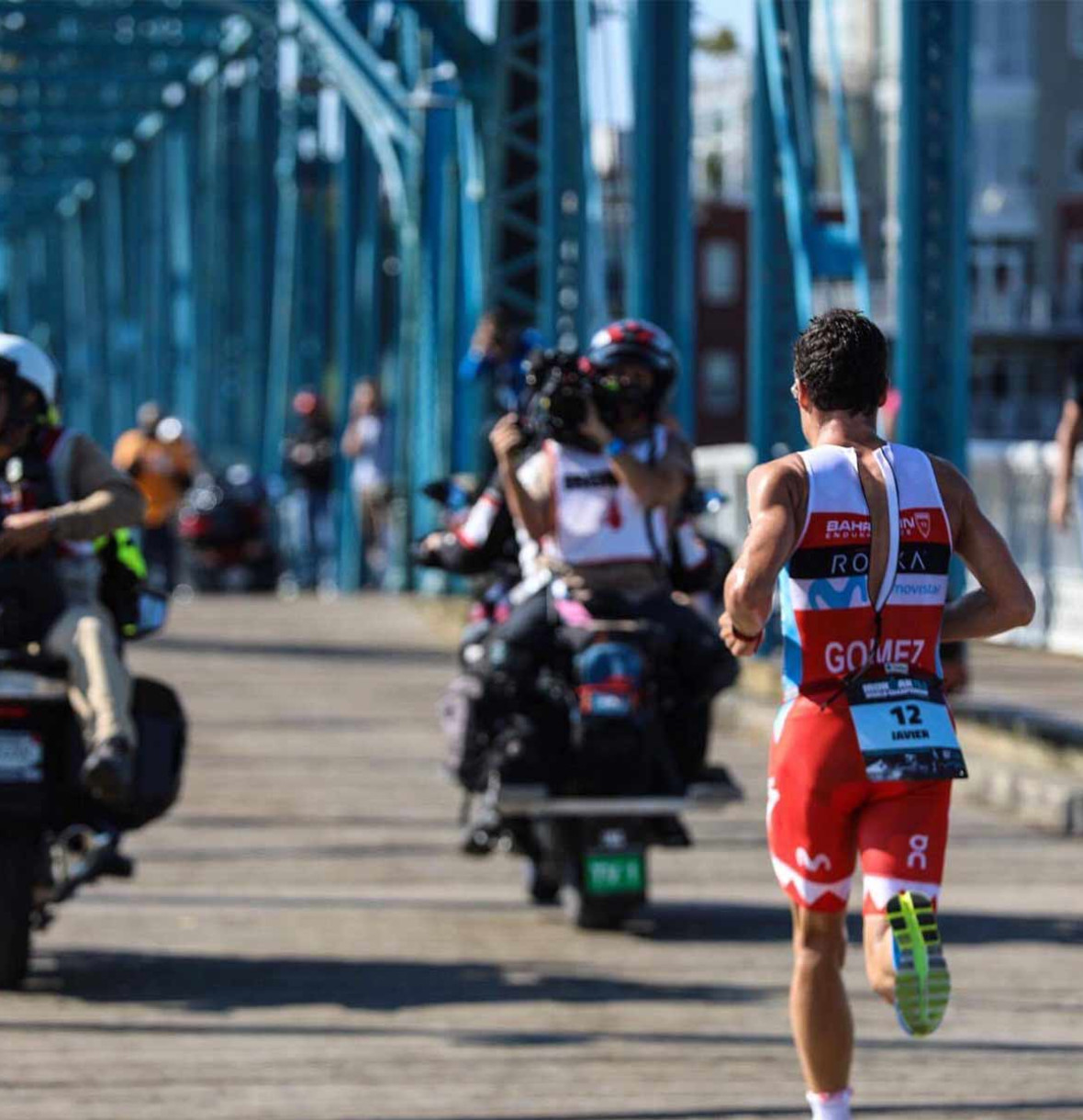 No triathlete approaches Javi Gómez's wins: five times ITU World Champion, Olympic Medal, nine times the world's top ITU ranking and, recently, the Ironman World Champion 70.3 (for the second time). We sat with Javi to hear his best tips and secrets for triathlon success.
As Javi says: "If you can, stretch it over the last kilometer of the bicycle fraction." This helps you prepare the transition to the stroke and activates those muscles in the legs that at that time might not be in use - a smart way to really start with grimace.
If you are trying to avoid greater distances, the World Champion suggests to rethink your mindset. "Longer does not necessarily mean more tiring, sometimes less time means more tiring because of intensity and speed." What matters most is having a plan and training process for the triathlon that suits your goals and following them consistently to turn them into reality.
As the old saying goes, the practice makes it perfect so if you're trying to score a new personal record in the triathlon or finish a race at the top of the podium with a broken neck speed, be sure to do everything in your workout as you would in the day of the race. As Javi says:
It's simple: if you want to run fast you have to train quickly.
Triathlon is a mental game. Your body is tired and tells you that you want to stop. This is where your mind comes into play, Javi says. You have to convince yourself that you can overcome the internal rumors that tell you to quit, realize that you still have another march and remember that even the opponents are suffering. Tell yourself that you are stronger than other competitors out there and overcome negativity.
The final sprint. One of the things Javi is best known for. Your advice? When you see the line of arrival use this motivation as an additional internal boost and think positively remembering the workouts to know that you can do it without a doubt. As Javi says:
At this point in the race nobody is rested then sometimes it is the one who is more mental-minded to take home the victory.
Before the race, Javi recommends rice, eggs and sweets to have the initial energy and the power that is needed during the race. His favorite meal after the race? Something salty, like pizza, which is one of the favorites of the World Champion.

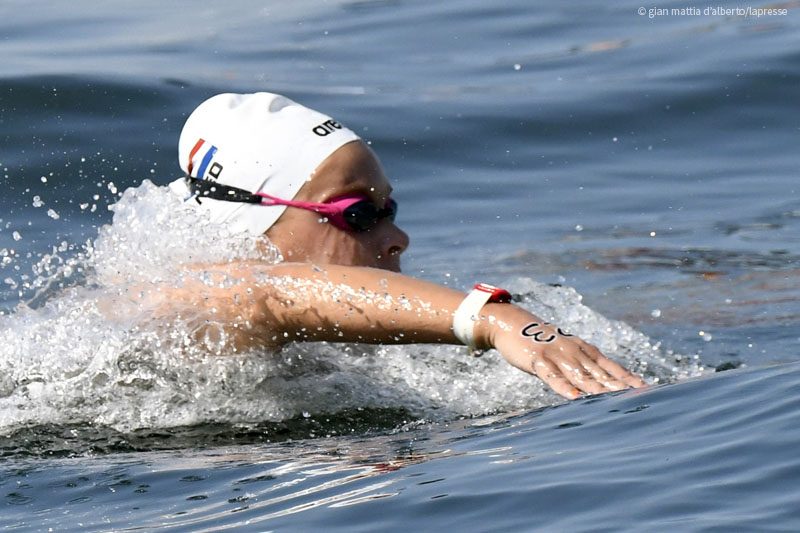 Even when the season in open water has entered here alive, it is good to not forget the importance of physical preparation. The maintenance of the aerobic base is the secret to getting to the end of the season in perfect condition both from the cardiovascular and muscular point of view. Not only that, aerobic work will allow you to work more closely on the qualitative aspects of your performance, allowing you to create a major gap between yourself and your opponents.
In this article we will present you four workouts that have the focus of resistance. These include both classical resistance and rhythm change jobs, or exercises that are based on speed change. This will allow you to build a good aerobic base and will help you learn how to handle speed changes, fundamental in free water racing.
Training 1 (intensity 3, for expert swimmers)
Warm-up
10 minutes long as you like
8 x 50 free style with pullbuoy and snorkel
4 x 100 # 25 Rowing + 50 Free Style Breathing Every 5 Arms + 25 Leg Rec Back Legs 20 "
Main-set
4 x 600 free split style in 3 x 200 with recovery of 10 "between one 200 and the other and 60" at the end of 600.
Swim-down as long as you like
Training 2 (Intensity 2, for intermediate and expert swimmers)
Warm-up
200 m swim to pleasure
200 m legs with table
200 m pull
6 x 50 sl progression # 1-3 # 4-6 rec. 20 "
Main-set
8 x 50 # 1 strong # 1 easy rec. 15 "
4 x 100 sl race pitch rec. 10 "
2 x 200 # 75 aerobics + 25 fast rec. 20 "
1 minute of additional recovery
8 x 50 # 1 strong # 1 easy rec. 15 "
4 x 100 sl race pitch rec. 10 "
2 x 200 # 75 aerobics + 25 fast rec. 20 "
Swim-down as long as you like
Training 3 (intensity 3, for expert swimmers)
Warm-up
10 minutes long as you like
12 x 25 legs with fast rec. 20 "
200 exercises
Main-set
50-100 rec. 5 "/ 15"
50-100-150 rec. 5 "/ 10" / 20 "
50-100-150-200 rec. 5 "/ 10" / 15 "/ 30"
50-100-150-200-400 rec. 5 "/ 10" / 15 "/ 20" / 60 "
50-100-150-200 rec. 5 "/ 10" / 15 "/ 30"
50-100-150 rec. 5 "/ 10" / 20 "
50-100 rec. 5 "/ 15"
Swim-down as long as you like
Training 4 (for all)
Warm-up
10'-15 'minutes at will
Main-set
Test on 2,000 mo 3,000 m (preferably in free waters) or racing in open waters.
 2017 was the year of some of the most sensational product launches in History On. The protagonists were the Cloud model (revisited) and the brand new Cloud X. To help you find the right shoe for running, training, everyday life or any other need, we will explain the details and differences between the two models.
Cloud is the favorite shoe of millions of runners since 2014. With an open-cast outsole, this is the lightest running shoe that offers maximum damping to keep rid of rivals. Time flies and today a new Cloud is born: thanks to the feedback of runners using the first version and adopting the latest technology and materials, Cloud remains one of the most popular running shoes on the market.
At the same time Cloud X was launched. A new On going in a different direction from the Cloud model, but retaining many similar features. Below we have listed similarities and differences between the two shoes, to see what can really be your case.


The main difference between Cloud and Cloud X is probably in the upper and the material used.
In the Cloud, a finely sewn mesh overlays a new one-piece jacket, giving the outside a simple look that can provide the right support. The Cloud tab is padded to ensure cushioning and to facilitate fit, as well as eliminating any strain on the neck.
Cloud X, on the other hand, provides a softer exterior with a mesh that lets you glimpse a second inner layer of the same material (the "stocking" of Cloud X, which we will discuss in more detail below). This two-layer system allows you to wrap your foot further, ensuring more breathability and more dynamic motion without forgetting the right support (necessary, for example, during a mixed training). In the Cloud X, a slimmer tab provides superior performance, giving up the extra cloud cushion for greater breathability and lower weight.
Another difference is the more "traditional" lacing system to allow Cloud X to better embrace the foot. Despite providing a couple of common laces inside the box, the Cloud is equipped with a fast On system that lets you wear it without having to hook it up. All this adds to the comfort and simplicity that characterize the Cloud, not to mention the convenience when you have to overcome safety checks at the airport or you need to take off your shoes at the end of a busy day.
Finally, also for the back of the Cloud X: an external counter-balloon designed to support, reinforce and maintain the 360 ° foot in perfect Running Remixed style.
The last piece of the puzzle to find the shoe that suits you: the differences inside. The first thing to notice in the two Cloud models is the unique fit for the fit. The Cloud features an opening to facilitate foot entry, padded on the edges to support ankles that naturally tire throughout the day. The Cloud X has a slimmer cushioning system, strategically positioned and thought to keep the foot firm and support where it is needed during the race.
Cloud X's fit is more adherent than Cloud's thanks to two-layer mesh that is visible from the outside (the inside acts as a sock, ensuring maximum breathability). Imagine it as a second skin, which supports the foot movements in all directions.
Although both shoes fall into the category of "light", the Cloud X mesh weighs less than the outside of the Cloud, reaching a total weight of 218 grams compared to the 230 grams of the Cloud (US8.5 size). Another factor affecting the weight of the two shoes is the greater cloud cushioning than the two layer Cloud X mesh, thinner and more elastic. That said, when you wear it you will not notice a difference of 12 grams, which practically corresponds to an apple slice.
Knowing the technology behind the two models should be easier to understand which one could best suit your needs. Cloud has always been a lightweight, high performance shoe and the new revised version will continue to be. Throughout the day, every day, the Cloud is designed to provide maximum comfort, but also the readiness to deal with whatever life has in life - virtually as though not having it.
Cloud X, however, has been developed for more dynamic movements (in perfect Running Remixed style) with its unique upper and special internal structures. This shoe is synonymous with action. After winning important races around the world (like when he won the last podium step during the Great Scottish Run at the foot of champion Chris Thompson), we can not wait to see what he can do now is available for everyone.
YOU CAN FIND EVERYTHING SHOES FROM MOTUS SHOES ON RUNNING: CLICK HERE
ALSO DISCOVER OTHER MODELS: CLOUDSURFER, CLOUDRUSH, CLOUDFLOW, CLOUDVENTURE, CLOUDFLYER
 Endurance Sport, the Importance of Recovery Nutrition
Nutrition in post-exercise (beyond 2 hours) is as crucial as the one that is introduced into the body before or during the exercise.
A very interesting aspect of long distance preparation, whether in water or triathlon, is the talk of nutrition. We have already dealt with several post topics regarding what to eat, when to eat and why to eat certain foods rather than others.
In this article, we will deepen the discourse about the importance of recovery power.
We start from a fundamental assumption: feeding in post-exercise (beyond 2 hours) is as crucial as the one introduced to the body before or during the effort.
Let's see why:
1. First of all, "recovery meal" means a consumed food ration within about 30 minutes of the end of a workout or race and is of crucial importance to restore muscle energy reserves, prevent trauma, and encourage training adaptation. The recovery meal must contain both carbohydrates and proteins.
2. Second, the recovery meal, if done within the window of 30 minutes from the end of the effort itself, will have no impact on your weight. This is because it rebalances the calorie consumption consumed during prolonged effort. What to eat?
3. Third, the post-exercise / contest meal favors the reduction of muscle inflammation and improves recovery in view of subsequent workouts. As already mentioned above, a balanced meal of carbohydrates and proteins or a ready-to-drink beverage can attenuate cortisol levels (an element that produces muscle inflammation) for better muscle recovery.
The advice I give you is four:
Sources:
 CALL US
